F&B Is The Chef’s Kiss of Every Event
Thinking of food as the event, and not just an afterthought or one item in a long list of ingredients, is a recipe for success.
 by
by 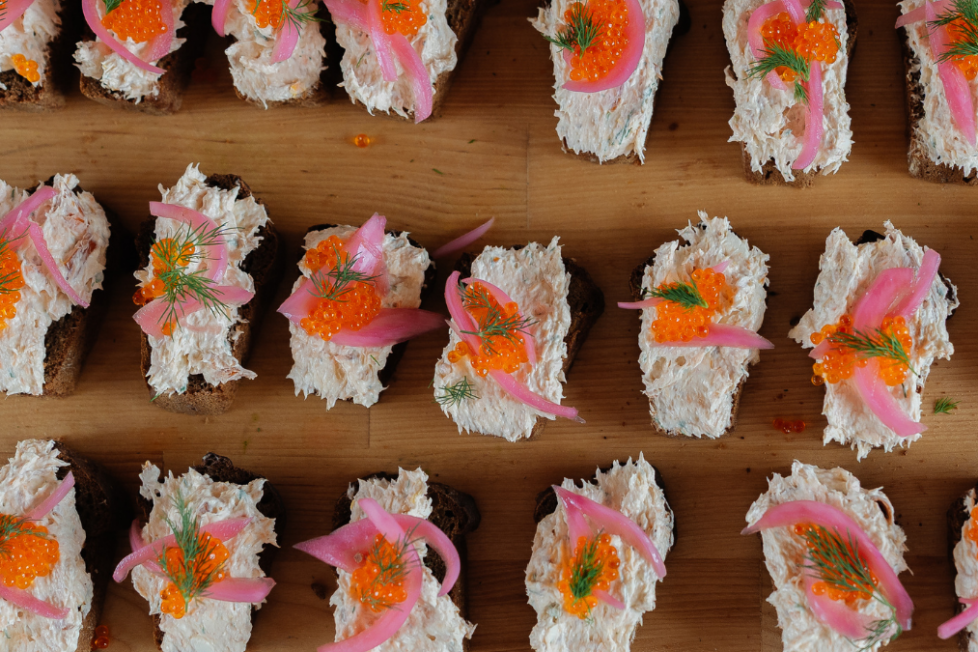

Thinking of food as the event, and not just an afterthought or one item in a long list of ingredients, is a recipe for success.
by By Kristine Hansen | Photo: ©Sand Valley Resort
Just like the saying goes, if you serve food, then people will come. That has always been true in the meeting industry. But how do you get the word out before your event that the food and beverage (F&B) is worth the investment?
Priscilla Joyce, the director of food and beverage at Hilton Fort Wayne at the Grand Wayne Convention Center, in Fort Wayne, Indiana, suggests that it pays off to frontload the idea into your marketing that food is a focus at your event. “A lot of clients come back because the food and beverage went well. To get that draw to our smaller city, our food has to be top notch,” she says. “You don’t want to have a 1,200-person event, and the food comes out and is terrible.”
You also want to tailor the food to the group. Joyce says 80% of Hilton Fort Wayne’s groups choose a customized menu, working with her and her team to adapt the offerings. That includes a recent culinary event Joyce hosted as part of a CrossFit competition. Attendees were health-conscious diners.
“They’re not going to eat hot dogs and pizza,” says Joyce. “In the normal food and beverage world, it’s all about taste. When we have a client come and say, ‘Hey, I want it to taste great,’ but you have to knock off the butter and the fat, it’s challenging, but it was also amazing. They were responsive to it.”
Another example of ultra customization was when a group working with Kelber Catering in Minneapolis wanted a Prince-themed event to honor the late Minneapolis musician. Shane Streitz, the company’s culinary executive chef, met the challenge with purple lighting and some purple foods, like purple potatoes and purple-hued desserts, as an ode to the musician’s “Purple Rain” album.
“We’re not just picking food that tastes good: [It’s] food with a purpose and a meaning,” says Streitz.
Thinking of food as part of the main event, and not just an afterthought or one item in a long list of ingredients, is a recipe for success. “It’s very important to start off the event planning by bringing the chef in,” says Linwood Campbell, CEO and general manager of Kelber Catering. Kelber Catering is the exclusive caterer of the Minneapolis Convention Center.
This allows the chef and, consequently, the food, to set the tone and then allow other elements of a meeting to follow, such as decor, colors, table arrangements and overall vibe.
Streitz always asks: “Are there any brand names, logos or colors that we can match the theme to? I want to hit all the senses with guests. I want to layer the experiences visually so things look good. I want people to be really engaged when they walk into that room.”
There is no limit to how far this mantra can go. With a recent group, who was planning to attend a Bruce Springsteen concert in Minneapolis, Streitz paired each dish at the event with inspiration from a Springsteen song. He then discussed each pairing — and why it worked. “I want to hit the vibe,” he says.
But it’s not just high-quality food served at meetings and events. It’s also taking the time to source locally, as that’s becoming more and more of an expectation of guests. “We partner with a lot of farms,” says Joyce. “We try to get a lot of our food from Indiana so we can showcase the state.”
“Sustainability is very important to today’s event planners,” says Streitz. “Nothing goes to waste in our kitchen.” This includes setting aside food scraps for the employees of a local pig farm to pick up and also emailing a network of organizations about extra food for the taking after an event. “We can [even] send a thank-you note from the pigs eating their food,” says Streitz, as a way to prove to meeting and event planners they walk the talk.
Honing in on what kinds of foods and drinks people are seeking in Wisconsin drives many of the culinary offerings at Sand Valley Resort, near Nekoosa. “When people come here, they’re like ‘Give me some cheese curds and a Spotted Cow,’” says Michael Carbiener, general manager, “and so we try to play off of state and local opportunities.”
Another approach to elevate food and beverage offerings is to invite top-notch chefs for a weekend of interactive events with guests, and meeting and event planners, where the food they prepare, as well as culinary demonstrations, is the sole focus.
Sand Valley Resort attracts golfers from across the U.S. every summer while its dining aspects slip under the radar. During the winter, however, a quieter season emerges at this central Wisconsin resort. This is why, for the last five years, the property has hosted its Friends of James Beard Chef Invitational in late February or early March. “The food and beverage role is the muse and center stage of this event,” says Amanda Rockman, an Austin, Texas pastry chef who has participated in this annual event.
“The opportunity to come to a resort like this, where it’s not that same kind of corporate environment, puts you at a different energy level and mindset,” says Carbiener about the resort’s attraction over a more traditional venue, such as a hotel ballroom.
Hosting an event in the slower season also brings in revenue that might not otherwise be possible during a crowded season. But it also entices foodies.
“You’re going to get the full attention of the sommelier and our culinary team. They’re not going to be competing with more day-to-day traffic,” says Carbiener.
For a busy chef like Erling Wu-Bower, a chef and partner at Maxwells Trading in Chicago, and participant in the Sand Valley Resort event in 2023, being invited to the resort for a few nights — even if it’s for work and not a vacation — is a win-win. “I love the setting at Sand Valley during the winter. It’s a beautiful juxtaposition to the green of the summer. There’s a quietness to the place that’s amazing,” explains Wu-Bower.
The resort’s many cottages were also activated for a dine-around event and meet-and-greets with chefs. Because of these face-to-face interactions, the organizations searched for chefs who identify as “people people.”
“We’re in the middle of the Midwest, and it’s all about hospitality and friendliness,” explains Jack Wenz, the resort’s executive chef. “They’re here for that week and have nothing but time to spend with the guests. They’re offering something from their restaurants. They really represent their city and state.”
For chefs who grind out long nights in their restaurants, participating in these events equates to team building and creative exploration. “Chefs can really be themselves when they aren’t immersed in the day to day of their store,” says Wu-Bower. “The guests at the invitational really get the pure version of the chefs, both in their personality and their food.”
Rockman agrees, “I love the teamwork. All of the chefs work together to create this event. Need help plating your dish? They got it. Cheer you on during your demo? Again, they got it.”
Promoting any food event is another opportunity to be creative and the approach will vary in each market.
Campbell partners often with Meet Minneapolis, the city’s tourism and convention bureau, and is often the first contact a group will have in planning their meeting.
Similarly, Sand Valley Resort’s past guests were a natural fit for marketing the James Beard event — even if they came for golf initially.
Carbiener says, “We have an audience who knows Sand Valley and what we’re all about.”
That’s who they marketed to first, before moving onto a more specific demographic of foodies. “These are people who search out culinary adventures, and they like to do those with friends and family as a way of socialization,” says Carbiener.
Owners of the property’s cottages immediately got on board, and saw this as a way to invite friends and family as an extension of their vacation home.
“One person invited eight couples. They had not been together as a group for more than 20 years,” says Carbiener. “That’s the kind of organic word-of-mouth promotion that’s special.”